Zuckerberg’s Big Biotech Moment
Mirrored from The Information — AI for archival readability. Support the source by reading on the original site.
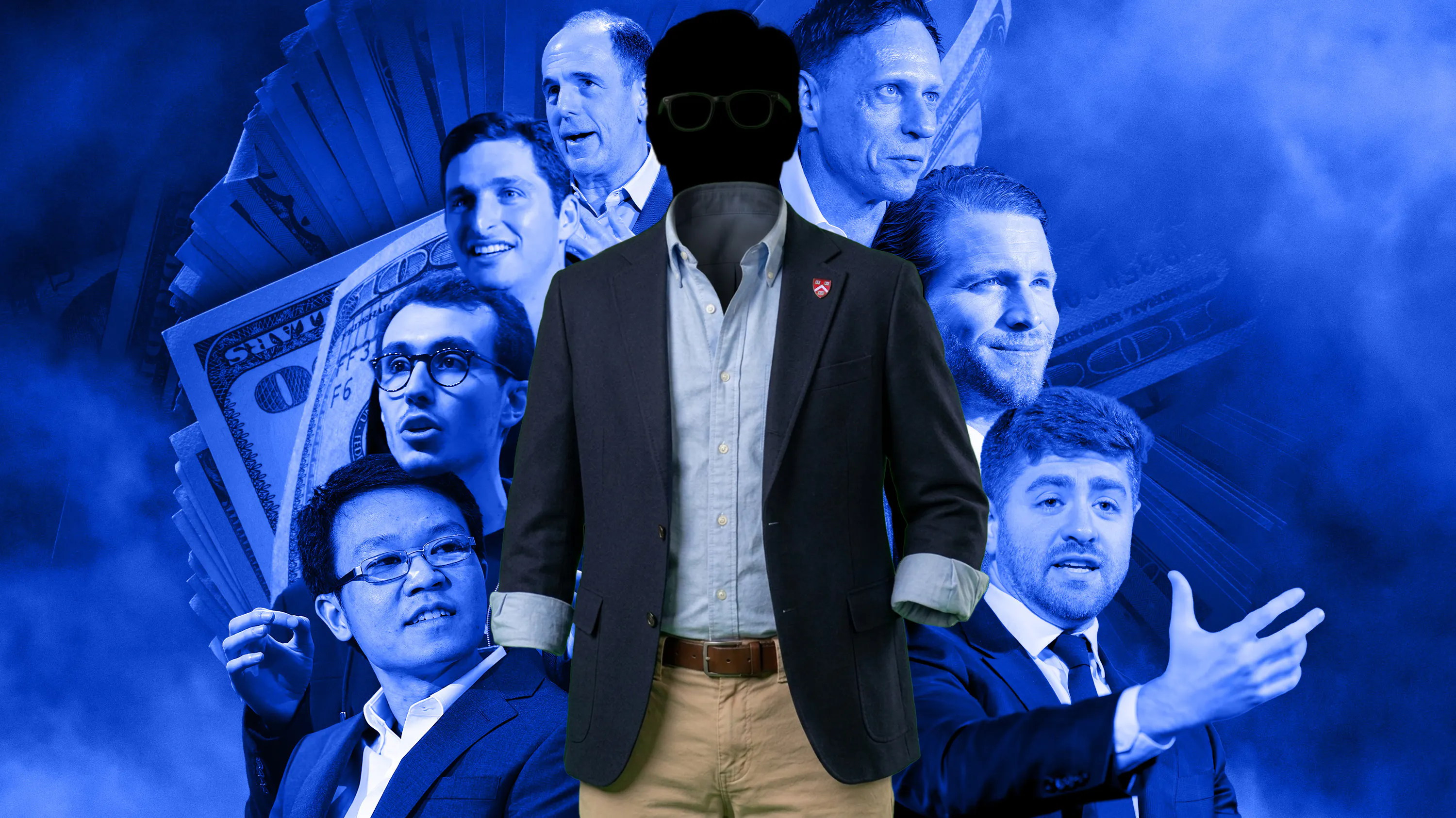
• The Big Read: Meet Zach Frankel, the secretive investor behind Cognition, Ramp
• Why techies are hoarding AI compute in their homes
• Plus, Recommendations—our weekly pop culture picks: “Bram Stoker’s Dracula,” “The AGI Chronicles” and “Your Mother Your Mother Your Mother”
Mark Zuckerberg, the founder and CEO of Meta Platforms, was only six years old in 1990, the year the Human Genome Project got launched.
That project, a multibillion-dollar international effort led by the National Institutes of Health and the Department of Energy, resulted in the announcement 10 years later of an awe-inspiring milestone: the first sequencing of the human genetic code—the building blocks of life. When President Bill Clinton described the achievement in 2000, he framed it in grand terms: “We are learning the language in which God created life.”
So it was intriguing to hear another scientific collaboration compared to that earlier achievement at a reception this week hosted by Biohub, the primary philanthropic effort of Zuckerberg and his wife, Priscilla Chan. The event this week is one of a number of recent moments that herald a changing of the scientific guard from major universities to big tech companies.
Speaking at the Treehouse Hotel in Sunnyvale, Calif., Zuckerberg told the gathering of around 100 tech executives, scientists and academics that he and Chan had started the first version of what is now called Biohub almost 10 years ago to the day with the goal of trying to cure and prevent all diseases by the end of the century. “We got a lot of eye rolls,” Zuckerberg said. “People thought that was kind of crazy.” Thanks to AI and other advances in technology, he added, “That no longer seems quite so crazy.”
He then turned to Lori Goler, president of the Chan Zuckerberg Initiative, who announced that Biohub is partnering with the National Institutes of Health and the Department of Energy in a $1.8 billion investment to create new technologies and build the scientific infrastructure required to drive “AI-powered biology.”
Biohub, which launched what it calls the “Virtual Biology Initiative” in April with a $500 million commitment, also said at the event that Meta, Google DeepMind and Isomorphic Labs, a company spun off of DeepMind, have agreed to kick in $300 million.
“We were inspired by the Human Genome Project,” Goler told the group. Goler added that they hope the initiative “will have the same level of impact and will be as important as the Human Genome Project has been.” (Anyone going to The Information’s WTF Summit later this month will hear more from Goler on the future of AI biology.)
Despite the evening’s focus on collaboration, science can be an isolating discipline in its daily practice. When I visit labs, I am always amazed by how quiet they are. The scientists are usually intently concentrating on not making a false step that could lead to the contamination of an experiment. And yet, once the results leave the lab and reach the public, clamor often ensues. Controversial findings spark debate over ethical and moral questions. Transformative discoveries are celebrated with an element of pageantry and recognition. Both are reminders of our common humanity—and that the ultimate goal of science is to make all our lives better. This leads to invitations to the White House like the one that happened back in 2000 with the scientists at the helm of the Human Genome Project. Or even more personal celebratory videos like the ones posted on social media all this week by happy scientists who received early morning calls from Sweden learning they had won Nobel Prizes. (How can you not be moved by this video of the Stanford neuroscientist Karl Deisseroth telling his kids he won the Nobel Prize for medicine?)
Zuckerberg is one of the most prominent symbols of how AI is altering the scientific landscape and bringing new leaders into an arena once dominated by major universities. He was appointed by President Trump in March to be a member of the President’s Council of Advisors on Science and Technology. He is joined there by other high-profile Silicon Valley names, including Google’s Sergey Brin, Oracle’s Larry Ellison and Nvidia’s Jensen Huang. Of the 13 people now on the council, only one is an academic researcher.
Two other signs this week reflect the change. On Oct. 8, Brin and Huang, alongside other tech notables, received the National Medals of Science from President Trump. The same day, Anthropic said it is expanding its own partnership with the government. It will provide $150 million worth of AI credits and other support for the Genesis Mission launched by Trump last year to use AI to accelerate scientific discoveries.
A Biohub team traveled to Washington in July to attend the first Genesis Mission Summit. Plans for the newly announced partnership with the National Institutes of Health and Department of Energy grew out of that visit. So perhaps it’s only fair that the government made its own pilgrimage out to Silicon Valley. Appearing on stage together is another way of showing a shared faith that Silicon Valley and AI are the favored engines these days to try to unlock insights into the mysteries of our cells and what goes wrong when we get sick.
I talked briefly with Goler the day after the reception. She said Biohub plans to host an annual AI and bio event. Biohub will likely find more guests eager to attend, from the private sector and the government. “It really is a cultural moment,” she said.—Amy Dockser Marcus (amy.marcus@theinformation.com)
Weekend’s Latest Stories
Shroud of Secrecy Cloaks Star Investor Behind Cognition, Ramp
While an air of mystery hangs around Zach Frankel, he has picked up stakes in some of tech's buzziest companies and established an extensive web of connections.

The GPUs in the Wine Cellar
Techies are tricking out their homes with powerful AI computers. Then come the heat issues.

Listening: “Bram Stoker’s Dracula”
How do you give, uh, fresh life to Bram Stoker’s classic? Filling it up with an all-star cast of film actors sure works. In Audible’s new adaptation of “Dracula,” Jonathan Bailey is the undead count; Maggie Gyllenhaal is Van Helsing, the occult expert who leads the expedition to destroy the vampire; and Ella Purnell (from “Fallout” and “Yellowjackets”) is Mina, a character reimagined from Stoker’s original from hapless victim into the story’s central protagonist.
Thanks to its Amazon budget, Audible clearly spared no expense: the sound production is top-notch and directing duties of the audio dramatization went to Mary Lambert, a Hollywood veteran best known for her 1989 film adaptation of Stephen King’s “Pet Sematary.” —Abram Brown
Reading: “The AGI Chronicles” by Kevin Roose
How exactly did we get here—to this moment in time with AIs that increasingly seem human absolutely everywhere? And that’s to say nothing of the endless hand-wringing about whether they’re actually going to end all of us humans.
A rather definitive answer to that question lies in “The AGI Chronicles,” a colorful, insidery account of the tech industry’s rapacious quest to develop artificial general intelligence. Or, as author Kevin Roose terms it, “the strangest decade in our history.” Roose, the former New York Times technology columnist, begins in the 2010s, a period when creating human-like AI was seen as something “between a pipe dream and a fantasy,” he writes, though a few people who are now bold-faced names wanted to give it a shot: OpenAI’s Sam Altman, Anthropic’s Dario Amodei and Google DeepMind’s Demis Hassabis among them. Of course, what looked like a quixotic endeavor then quickly morphed into the multitrillion-dollar competition that currently surrounds us.
As Roose charts the twists and turns, he includes many little details to love. Just before Altman, Oracle’s Larry Ellison and President Donald Trump announced Project Stargate in January 2025, Altman had to send a last-minute text message to Jeff Bezos to make sure they could use that name for their massive data center initiative: Bezos’s Amazon owns MGM, and MGM owns the rights to the “Stargate” TV-and-movie franchise. Meanwhile, Google’s Gemini was almost called Titan—a Hassabis suggestion—but company lawyers vetoed the name as “too aggressive.” And when Daniela Amodei worked at OpenAI, she and her husband, an early OpenAI board member, used a large collection of stuffed animals as their “personal advisory council,” as Roose puts it. (That detail went viral a bit last week from an early excerpt of the book.)
From “The AGI Chronicles,” what I was struck by most is how the AI race has warped its contestants and magnified their worst tendencies. I expect that trend will continue. It’s not as if they’ll be facing any less pressure anytime soon. According to Roose, many of those titans echoed the same sentiment in conversations with him—that they “missed their old lives, and they relished the times when everyone thought they were crazy for believing that AGI was possible,” he writes. “Being an underdog, they said, was more fun than being a power broker, with all the scrutiny and skepticism it brought.”—A.B.
Watching: “Your Mother Your Mother Your Mother”
By actor Mahershala Ali’s own telling, the past few years have been challenging, with his fate skewed by other forces that have defied his control, including Marvel’s decision to shelve his reboot of “Blade,” its half-vampire vampire slayer.
“I think in some ways I’m probably just now starting to let certain things go, because there are ways in which I think I’ve begun to let go of my expectations of the world and the business,” Ali said in a recent GQ interview to promote his new film, “Your Mother Your Mother Your Mother.” “It’s like you’re fighting with people to see you how you see yourself.”
I can see how Ali’s own real-life wrestling with his identity and fate might’ve fueled his interest in doing “Your Mother Your Mother Your Mother.” His character in the film, a mournful hitman named Latif, faces those same challenges—as he tries to extricate himself from a dingy Houston underworld and take up single-parent duties to his three children. Complicating that escape is a gangster pastor (John Cho) and his mobster former employer (Laith Nakli). The thriller-ish drama is punctuated by several balletic action sequences, all deftly handled by newcomer director Bassam Tariq, who’d been attached to helm the “Blade” reboot with Ali. If nothing else, “Your Mother Your Mother Your Mother” is a sharp jab to Marvel’s ribs: Tariq and Ali seem like they would’ve made a terrific “Blade” together.—A.B.
Discussion (0)
Sign in to join the discussion. Free account, 30 seconds — email code or GitHub.
Sign in →No comments yet. Sign in and be the first to say something.