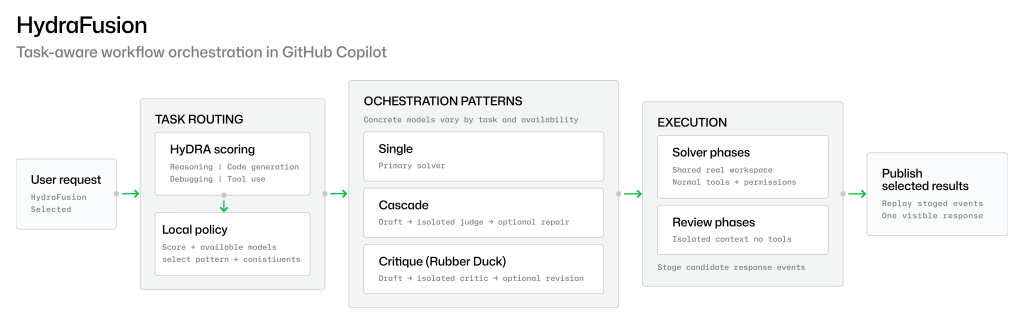
News / #funding Tag Funding 500 articles archived under #funding · RSS Sign in to follow Simon Willison community 1mo ago Datasette 1.0a39 and 0.65.4 security releases Datasette 1.0a39 and 0.65.4 security releases Today we're releasing two new security patch versions of Datasette: 1.0a39 and 0.65.4 - one for the current alpha series and one for the stable 0.65.x family. These are security fixes which you should apply if you are running a… 36 The Information — AI news-outlet 1mo ago Bending Spoons Buys Miro For $1.355 Billion Italian digital conglomerate Bending Spoons is buying whiteboarding software firm Miro at a valuation of $1.355 billion, the latest in a series of purchases the Italian firm has done at knock-down prices. The price for Miro is a huge discount to its peak valuation of $17.5… 16 TechCrunch — AI news-outlet 1mo ago Maven Robotics wants to steal your robot deployment deal Maven Robotics emerged from stealth today with a $100 million Series A and active deployments. 29 Hugging Face Daily Papers research 1mo ago Why Is Video Still So Expensive? A Survey of Inference-Efficiency Mechanisms in Video and Audiovisual LLMs Abstract This survey examines inference-efficiency techniques for video large language models, analyzing cost reductions across frame sampling, encoding, token compression, and language model stages while identifying evaluation gaps. Generated by thinkingmachines/Inkling-Small… 25 Hugging Face Daily Papers research 1mo ago SWE-Bench Pro Verified: A Reliable Benchmark for Software Engineering Agents Abstract SWE-Bench Pro has emerged as a standard benchmark for evaluating software engineering agents on challenging repository-level tasks. However, our analysis work show that its evaluation is undermined by two sources of unreliability: reward hacking, enabled by leakage of… 20 arXiv — Machine Learning research 1mo ago AhaBench: Do Agents Learn from Prior Experience? A Benchmark for Long-Horizon Continual Learning arXiv:2609.05435v1 Announce Type: new Abstract: Modern language agents are expected to operate over long horizons: they ask follow-up questions, reuse worked examples, handle tool feedback, and adapt to delayed consequences. Most evaluations still reset the agent after a prompt… 19 arXiv — Machine Learning research 1mo ago Robustness of LLM-Generated SystemVerilog Assertions to Semantics-Preserving RTL Transformations arXiv:2609.05658v1 Announce Type: new Abstract: Large language models (LLMs) are increasingly being explored for automating SystemVerilog Assertion (SVA) generation, yet most evaluations report correctness on a single syntactic representation of an input. Such point accuracy… 35 arXiv — Machine Learning research 1mo ago Rethinking the Evaluation of Efficiency Methods for Multi-Agent Systems arXiv:2609.05933v1 Announce Type: new Abstract: Efficiency is increasingly important for Large Language Model (LLM)-based multi-agent systems (MAS), as larger models and more agents introduce substantial execution costs. Recent methods aim to make MAS cheaper by pruning agents,… 38 arXiv — Machine Learning research 1mo ago DataFlex-RL: An Evaluation Platform for RLVR Data Policies arXiv:2609.06107v1 Announce Type: new Abstract: Data policies for reinforcement learning with verifiable rewards (RLVR) determine which rollouts are used, how strongly they are weighted, and which domains contribute to subsequent training batches. We introduce DataFlex-RL, an… 19 arXiv — Machine Learning research 1mo ago Robust Conformal Consensus: Multi-Agent LLM-as-a-Judge Interval Evaluation with Conformal Prediction arXiv:2609.06367v1 Announce Type: new Abstract: LLM-as-a-Judge has emerged as a promising paradigm for evaluating natural language generation. However, the uncertainty associated with such evaluations remains largely unexplored, which limits their reliability in real-world… 30 arXiv — NLP / Computation & Language research 1mo ago SEA-SpeechBench: A Large-Scale Multitask Benchmark for Speech Understanding Across Southeast Asia arXiv:2609.09672v1 Announce Type: new Abstract: The rapid advancement of audio and multimodal large language models has unlocked transformative speech understanding capabilities, yet evaluation frameworks remain predominantly English-centric, leaving Southeast Asian (SEA)… 22 arXiv — NLP / Computation & Language research 1mo ago CARRE: Counterfactual Action Retrieval and Reason Evaluation for Explainable Churn Prescription arXiv:2609.09766v1 Announce Type: new Abstract: Churn models typically identify high-risk customers but do not specify which feasible retention action should be considered or why that action is appropriate. We present CARRE (Counterfactual Action Retrieval and Reason… 33 arXiv — NLP / Computation & Language research 1mo ago YallaMorph: A Benchmark for Evaluating Arabic Morphological Generation in Large Language Models arXiv:2609.10153v1 Announce Type: new Abstract: Arabic morphology remains challenging for large language models, since fluent generation does not guarantee accurate morphosyntactic control. Existing Arabic evaluations mainly target downstream tasks and do not directly test… 14 arXiv — NLP / Computation & Language research 1mo ago DiSCo: A Distribution-First Steering and Cultural Prior Evaluation Framework for Measuring Cultural Preference Bias in LLMs arXiv:2609.10253v1 Announce Type: new Abstract: Large language models (LLMs) are increasingly deployed in globally used assistants, yet their default choices in culturally grounded everyday situations can systematically favour some cultures over others, affecting localisation,… 33 arXiv — NLP / Computation & Language research 1mo ago From Rubrics to Reliable Scores: Evidence-Grounded Text Evaluation with LLM Judges arXiv:2601.08654v3 Announce Type: replace Abstract: Rubric-based text evaluation increasingly relies on large language models (LLMs) as scalable judges, yet frozen black-box models can interpret the same criteria inconsistently, produce score attributions that are difficult to… 14 r/MachineLearning community 1mo ago I trained a 348M model trained from scratch on 22.7B tokens that does 14 digit arithmetic [P] Hello this is my fifth small language model I've made and apart of my third series and it has been a lot of work but it payed off: **348M parameters, 22.7B tokens**, then fine-tuned into a math model that solves arithmetic by *showing the work* — column addition with carries,… 37 TechCrunch — AI news-outlet 1mo ago AI research startup Listen Labs scrubbed a $1.5B funding round for Salesforce talks Listen Labs walked away from a signed Series C term sheet from Menlo Ventures, sources say. 22 TechCrunch — AI news-outlet 1mo ago Sequoia doubles down on Cymphony as AI agents create new enterprise security risks Cymphony was valued at more than $100 million in a $25 million Series A co-led by Sequoia and SMBC Fin Atlas Beyond Fund. 28 Latent.Space news-outlet 1mo ago [AINews] OpenAI reports Navier-Stokes singularity find in 88 hours using Astra-next, roughly 10,000 agents and 130B tokens (>$40M), a contender for second ever Millennium Prize awarded Overshadowing Cognition's $48B Series E, Mistral's $24B Series D, Meta's Muse agent, and GPT Image 2.5. The most jam packed, feel the AGI day in the history of AI. 9 The Information — AI news-outlet 1mo ago Gimlet's Three-Tranche Deal Reveals AI Funding Frenzy Gimlet Labs said late last week it had raised $300 million at a valuation of about $3 billion, in a round led by new investor Andreessen Horowitz. Today we have unreported details on how that round, which boosted its valuation by a whopping 16 times from its last PitchBook… 20 The Information — AI news-outlet 1mo ago Gimlet's Three-Tranche Deal Reveals AI Funding Frenzy Gimlet Labs said late last week it had raised $300 million at a valuation of about $3 billion, in a round led by new investor Andreessen Horowitz. Today we have unreported details on how that round, which boosted its valuation by a whopping 16 times from its last PitchBook… 19 TechCrunch — AI news-outlet 1mo ago Cognition hits $48B valuation, signaling investors believe AI coding is far from a winner-take-all market Cognition's valuation multiple is higher than Cursor's was before selling to SpaceX. 5 The Information — AI news-outlet 1mo ago Cognition Raised Over $2 Billion at a $48 Billion Valuation Cognition, the artificial intelligence startup behind the Devin coding assistant, has raised more than $2 billion at a $48 billion valuation including the new funding, nearly double its valuation in May, the company said Tuesday. The round shows coding agent startups are… 37 TechCrunch — AI news-outlet 1mo ago Mistral raises €3B as sovereign AI becomes big business The French AI lab has raised €3 billion at a €21 billion valuation in a Series D round led by Samsung, Scaleup Europe and PSG Equity. 23 Smol AI News news-outlet 1mo ago OpenAI reports Navier-Stokes singularity find, a contender for second ever Millenium Prize awarded, overshadowing Cognition's $48B Series E, Mistral's $24B Series D, Meta's Muse agent, and GPT Image 2.5 **OpenAI** announced a proposed Navier–Stokes proof by an internal model "**significantly more capable than GPT-6 Astra**" using **10,000 agents** over **88 hours** plus **17 hours** of formal verification. The effort highlights the emergence of **massive test-time compute… 19 Hugging Face Daily Papers research 1mo ago Bilevel Coordinated Reflection: A Game-Theoretic Approach to Multi-Agent LLM Systems Abstract The study formalizes multi-agent LLM coordination via bilevel games and stochastic memory reflection, introducing a grounded evaluation gate and SRMA algorithm with convergence guarantees, validated on SWE-bench. Generated by thinkingmachines/Inkling-Small Multi-agent… 4 r/LocalLLaMA community 1mo ago Benchmarking calories evaluation with LLMs I wanted a quick calories counter for myself, using LLMs to evaluate the calories from pictures of meals + descriptions. I needed to pick a model so I made a quick benchmark. The setup was: - Nutrition5k photos for photo + calories:… 29 arXiv — Machine Learning research 1mo ago BER-PEF: Unified Human Mobility Predictability Evaluation via Bayes Error Rate Estimation arXiv:2609.04292v1 Announce Type: new Abstract: Human mobility predictability concerns the best prediction performance attainable from a given target and input information, but its ground truth is not directly observable on real mobility data. We present BER-PEF, a… 22 arXiv — Machine Learning research 1mo ago Disentangling Attention in Deep Operator Learning: A Controlled Study of Data-Driven and Physics-Informed Architectures arXiv:2609.04407v1 Announce Type: new Abstract: Deep neural operators learn mappings between input functions and complete PDE solution fields, enabling forward evaluations of new problem instances orders of magnitude faster than conventional numerical solvers. Attention… 18 arXiv — Machine Learning research 1mo ago MomentQuant: an even more minimalist interval method with linear time complexity for time series classification arXiv:2609.05136v1 Announce Type: new Abstract: Time series data is very common in many real-world applications and in numerous domains, with increasing interest for automated information extraction using machine learning. One of these subfields is time series classification,… 21 arXiv — Machine Learning research 1mo ago Interface-Induced Trajectory Censoring arXiv:2609.03966v1 Announce Type: cross Abstract: Agent evaluations report a tool-call rate read off the serving stack. That number can be zero while the model is emitting well-formed calls: the interface censors the trajectory before anything downstream sees it. On BFCL v4's… 38 arXiv — Machine Learning research 1mo ago Privacy Failure in Split-LLM Training, The Returned Gradient Nullifies the Decoys arXiv:2609.04382v1 Announce Type: cross Abstract: We present a systems-security case study of a two-node split-LLM training system whose privacy evaluation passed while leaving an observable channel untested. The Trusted Local Node (TLN) sends protected activations to the… 19 arXiv — NLP / Computation & Language research 1mo ago You Really Didn't Get That? Benchmarking Social Pragmatic Inference for Indirect and Playful Chinese Online Comments arXiv:2609.04384v1 Announce Type: new Abstract: Chinese online comments often convey social meaning through indirect and playful language that is hard to interpret without context. Existing evaluations largely organize items around predefined phenomena or controlled pragmatic… 12 arXiv — NLP / Computation & Language research 1mo ago Evaluation of Phonetic Encoding Algorithms on Transcription Datasets arXiv:2609.04391v1 Announce Type: new Abstract: In this work, a novel evaluation scheme built on a generalized variant of the Rand Index measure, namely, the H\"ullermeier-Rifqi Index, is proposed in order to assess how well phonetic encoding algorithms conform to word-based… 28 arXiv — NLP / Computation & Language research 1mo ago A Systematic Evaluation of Cross-Lingual Consistency Enhancement Methods in Multilingual Language Models arXiv:2609.04409v1 Announce Type: new Abstract: Multilingual language models often produce inconsistent answers to semantically equivalent questions across languages, motivating methods to improve cross-lingual consistency (CLC). However, existing methods are typically evaluated… 6 arXiv — NLP / Computation & Language research 1mo ago On Epistemic Diversity in Large Language Models arXiv:2609.04835v1 Announce Type: new Abstract: Large language models (LLMs) are increasingly used not only to retrieve information, but to answer questions, explain, teach, and support inquiry. In such settings, evaluation cannot be exhausted by accuracy or alignment alone. A… 17 arXiv — NLP / Computation & Language research 1mo ago MMTClinic: Multimodal, Multilingual Time Series Question Answering and Reasoning Benchmark for Clinical Domain arXiv:2609.04842v1 Announce Type: new Abstract: Time-series data in clinical settings is crucial for capturing dynamic changes in a patient's health over time, enabling timely diagnosis, personalized treatment, and early detection of critical events. However, the development of… 27 arXiv — NLP / Computation & Language research 1mo ago RefactorPlatform: An Open-Source Harness for Controlled Evaluation of Repository-Scale Refactoring Agents arXiv:2609.04898v1 Announce Type: new Abstract: Repository-scale refactoring requires coding agents to propagate a single change across many interdependent files without altering program behavior, yet to our knowledge no existing harness isolates the design choices that… 12 arXiv — NLP / Computation & Language research 1mo ago MoirfEolas and Cr\'iochScore: Developing Resources for and the Evaluation of Tokenization Alignment with Irish Morphology arXiv:2609.05022v1 Announce Type: new Abstract: This paper presents new tokenization resources for Irish and evaluation measures of alignment with the morphological boundaries of the language. We present MoirfEolas, a dataset of over 35,000 Irish words mapped to their respective… 17 arXiv — NLP / Computation & Language research 1mo ago Auditing Bias and Safety in Voice AI Customer Care arXiv:2609.04206v1 Announce Type: cross Abstract: Voice AI systems increasingly mediate customer care interactions where caller presentation cues such as accent, affect, fluency, and urgency are available alongside the service request. Existing fairness and safety evaluations… 15 arXiv — NLP / Computation & Language research 1mo ago Harbor Adapters and Harbor-Index: Infrastructure and a Curated Meta-Dataset for Large-Scale Agentic Evaluation arXiv:2609.04298v1 Announce Type: cross Abstract: Evaluating agents on the growing number of agentic benchmarks is challenging because they often require complex environments and agent integrations. We introduce Harbor Adapters, a unified evaluation infrastructure for agentic… 6 arXiv — NLP / Computation & Language research 1mo ago TruthInsightBench: An Evidence-Grounded Benchmark for Automated Evaluation of Open-Ended Scientific Discovery Agents arXiv:2609.05079v1 Announce Type: cross Abstract: Autonomous coding agents are increasingly proposed as AI-scientist systems that conduct analyses and write research reports, but executing a prescribed analysis is not the same as making a discovery. Existing benchmarks are… 23 arXiv — NLP / Computation & Language research 1mo ago Measuring AI Accountability Through Argumentation Analysis: Can Model Reasoning Withstand Scrutiny? arXiv:2609.05088v1 Announce Type: cross Abstract: AI oversight methods rely on ground truth for validation, but what constitutes appropriate AI behavior is contested. This leaves evaluation of moral reasoning in LLMs and debate-based oversight implicitly avoiding realistic… 17 arXiv — NLP / Computation & Language research 1mo ago Measuring the Novelty of Biomedical Papers Using the Latent Distances between Knowledge Units arXiv:2609.05175v1 Announce Type: cross Abstract: Measuring the novelty of scientific papers is a central concern in research evaluation and scientometrics. From a recombination perspective, prior studies have largely focused on the co-occurrence of knowledge units to assess the… 8 Hugging Face Daily Papers research 1mo ago Motion-Omni: End-to-End Joint Speech and Full-Body Motion for Spoken Dialogue Abstract Motion-Omni is an end-to-end framework that jointly generates spoken dialogue and full-body co-speech motion from shared hidden states, using scalable pseudo-labeling and a unified evaluation protocol to achieve real-time, aligned responses. Generated by… 28 TechCrunch — AI news-outlet 1mo ago XDOF, just three months out of stealth, is in talks for a Series B at a $1.2B valuation The round is being raised just months after the robot data startup exited from stealth. 6 Hugging Face Daily Papers research 1mo ago VeriPhy: Agentic Physical Reasoning for World Model Evaluation and Refinement Abstract VeriPhy verifies generated video by compiling prompts into typed physical obligations, executing frozen expert analyses with provenance tracking, and mapping evidence to auditable three-valued verdicts. Generated by thinkingmachines/Inkling-Small Visual fluency in… 12 GitHub Blog — AI & ML official-blog 1mo ago Project HydraFusion: Frontier quality via multi-model orchestration In controlled offline evaluations, HydraFusion’s selective coding workflows matched or exceeded the evaluated Opus 5 baseline while reducing estimated workflow cost. Now available as a research preview in GitHub Copilot. The post Project HydraFusion: Frontier quality via… 29 Hugging Face Daily Papers research 1mo ago Last Translation Benchmark Abstract The Last Translation Benchmark introduces peer-reviewed, multimodal examples that break leading translation models alongside handcrafted verification rules for reliable, actionable evaluation. Generated by thinkingmachines/Inkling-Small For scientific progress, we need… 22 The Information — AI news-outlet 1mo ago Nvidia Discusses $2.5 Billion Investment in Mira Murati’s Thinking Machines Lab Mira Murati’s Thinking Machines Lab is in talks to raise between $5 billion and $6 billion at a pre-money valuation of at least $40 billion, with venture firm Accel in discussions to lead the round, The Information reported . Chipmaking giant Nvidia is expected to contribute… 5 Page 8 of 10 · 500 articles ← Newer Older →